
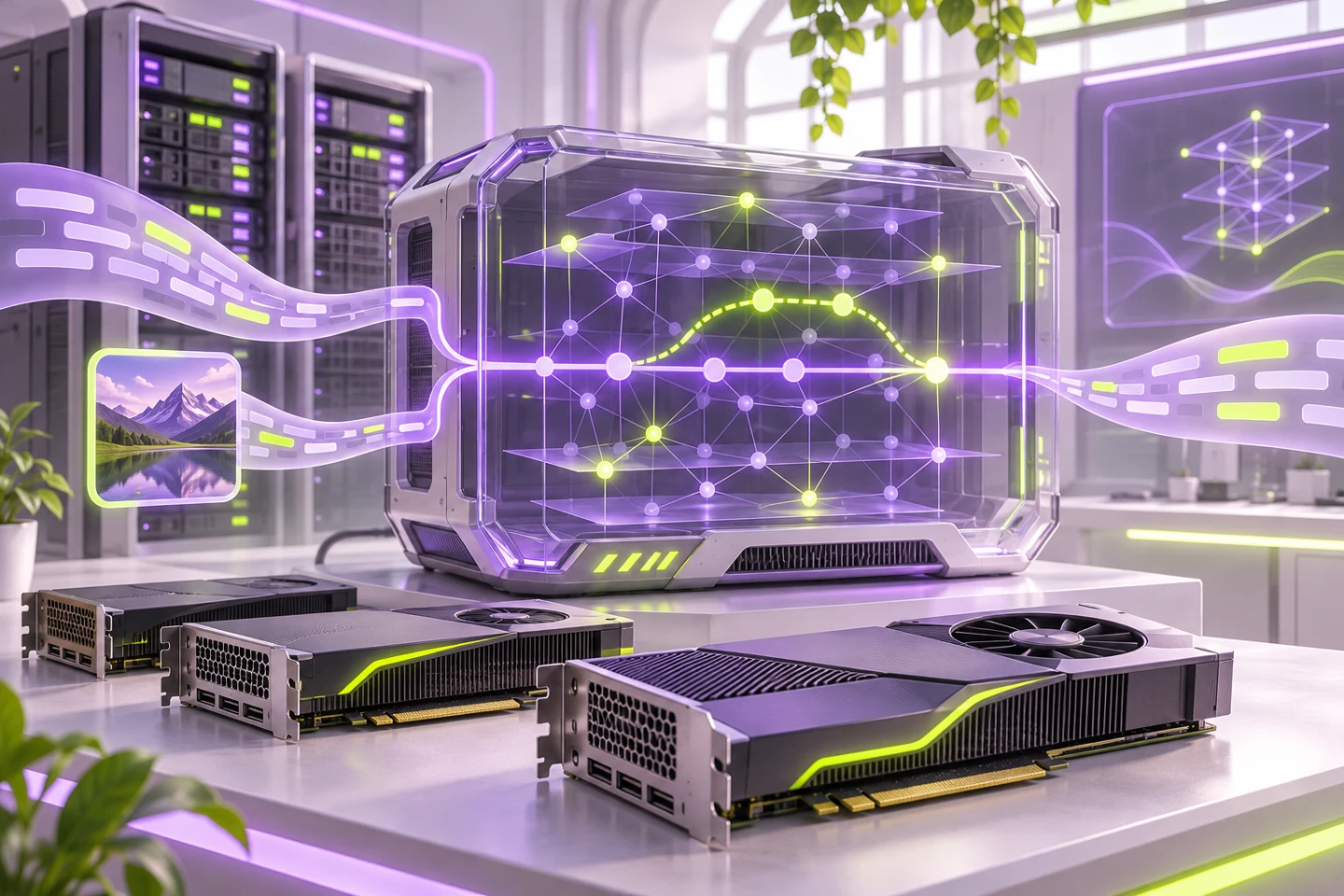
A specific implementation milestone
The release tag and merged pull request establish that an implementation reached llama.cpp’s main branch. Its author describes it as independent from an earlier proposed implementation. For users, that supplies a concrete code revision against which compatibility can be checked. It does not certify a third-party GGUF download or establish that every desktop application has incorporated the change. A wrapper shipping an older engine may still lack it. Our assessment is that an evaluation should identify the actual embedded runtime before treating a model’s appearance in an application catalog as evidence of execution support.
Read validation notes within their scope
The pull-request author reports comparisons against SGLang, including image-processing checks, and describes speculative-decoding experiments. These are upstream development observations, not benchmarks independently reproduced by this publication. The visible description still presents verification items as a TODO checklist, so we do not treat the list as certification that every mode is complete. Close numerical agreement for one input also does not establish equivalent behavior for long conversations or autonomous tasks. A meaningful comparison should keep the input, image preprocessing and serving settings explicit, and distinguish output agreement from end-to-end task success.
The weight card and engine are different layers
MiniMax describes M3.1-Flash as a multimodal mixture-of-experts model with text output, sparse attention and a DSpark draft component. The card identifies a minimax-community license, which should not be assumed to be Apache 2.0. Features of the official model do not automatically become features of each integration. Video input, the maximum context window and acceleration paths need confirmation for the selected runtime and package. Likewise, published results for official weights are not a promise about a community quantization. Changing precision, image handling or decoding parameters changes the deployment being evaluated.
Local does not mean lightweight
The pull request mentions a real-model check on a system with eight H200 accelerators. That is the configuration of one reported experiment, not a minimum specification and not evidence of ordinary laptop performance. Our practical reading is to establish file provenance, format and memory capacity before drawing a hardware conclusion. A large advertised context window does not imply constant throughput as a prompt grows. For a real workload, first-token latency, sustained generation, memory use and stable task behavior are more informative than architecture support alone. Those measurements should accompany the precise engine revision so that another operator can reproduce them.

Discussion.
Your perspective matters. Sign in, pick a nickname and choose your cyber identity.
Loading discussion…
Your account name, email and photo stay off your comments.