
The mission outcome is clearer than its cause
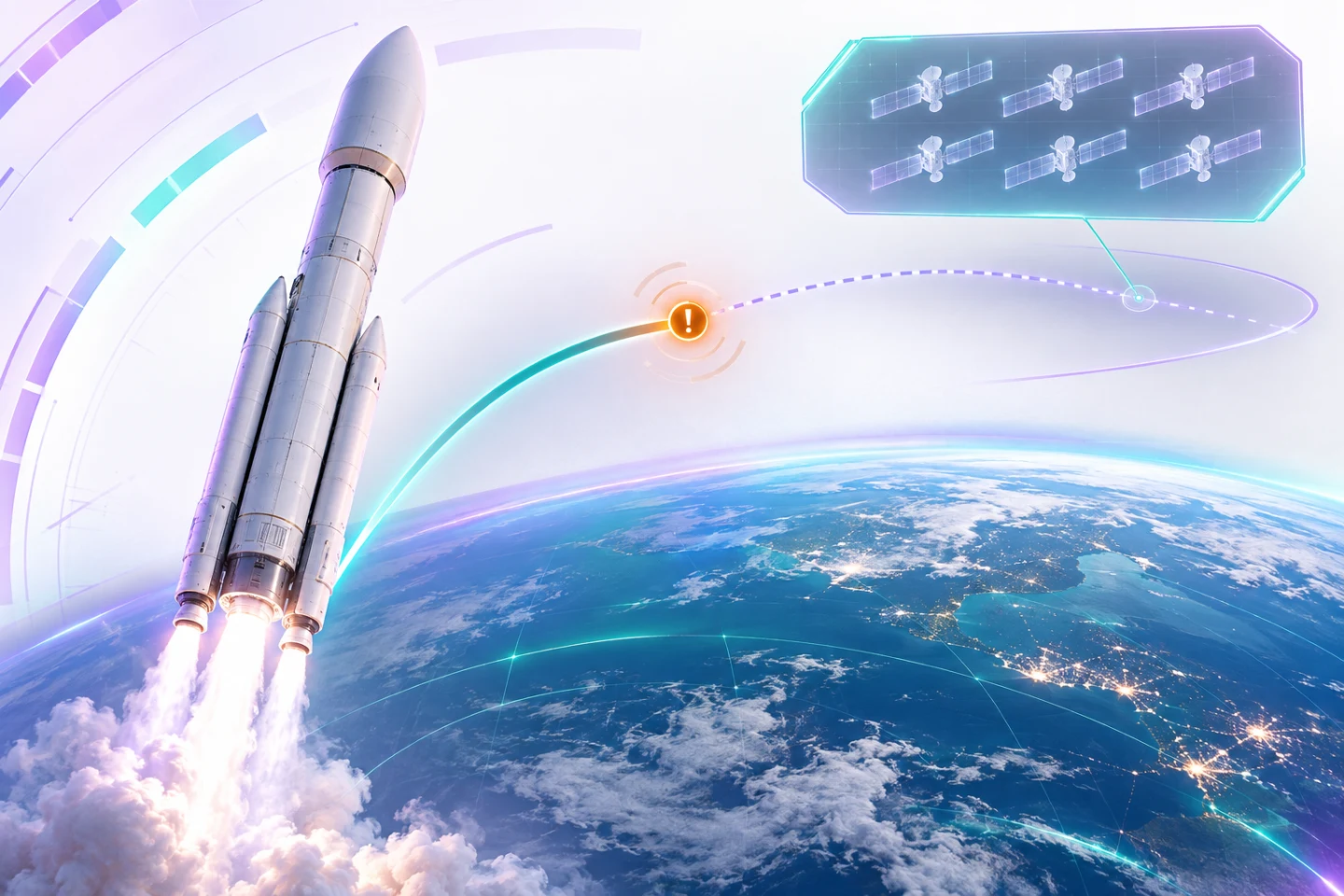
Vulcan Leo 1 launched from SLC-41 at Cape Canaveral. Ars Technica reports the loss of the rocket and its satellite payload; the operator’s own statement confirms the central outcome that the Amazon mission was not delivered to orbit. ULA says it will work with its customer and appropriate organizations to determine the cause and corrective action. Its aim to return to flight as quickly as possible is not a dated launch commitment. A completed technical investigation was not available in the verified statement.
Vulcan has a substantial role in Amazon’s deployment plan
Amazon’s prelaunch material describes a contract for 38 Vulcan missions carrying more than 1,500 first-generation Leo satellites. It identifies the vehicle as a future deployment workhorse. LV-01’s 40 spacecraft were intended to be the program’s largest single launch batch at that point. Amazon also uses a diversified launch portfolio including Arianespace, Blue Origin and SpaceX. Losing this mission is consequently a meaningful deployment setback, but does not by itself establish that the entire program has stopped or that satellites launched previously are no longer operating.
Configuration changes are background, not a root-cause finding
ULA documented a VC6L configuration with six solid rocket boosters, an extended payload fairing and a low-Earth-orbit-optimized Centaur V upper stage. The operator describes a lighter upper stage intended to increase the satellite payload. Dedicated Amazon processing infrastructure at Cape Canaveral was another part of the mission preparation. Those features are established preflight facts. Their presence does not demonstrate that a particular upgrade caused the failure, and a technical description of the vehicle should not be substituted for a forensic conclusion.
Earlier booster work does not settle the new investigation
Vulcan was returning after work related to a solid-booster nozzle anomaly on a February mission. ULA described design and manufacturing changes alongside additional testing. The new anomaly cannot automatically be equated with that earlier issue without investigative findings. The next meaningful milestones are an operator explanation, defined corrective actions and a revised manifest. Amazon’s previous expectation that LV-02 could follow within weeks depended on a nominal LV-01 mission; it should no longer be repeated as a guaranteed current schedule after the confirmed failure.

Discussion.
Your perspective matters. Sign in, pick a nickname and choose your cyber identity.
Loading discussion…
Your account name, email and photo stay off your comments.