
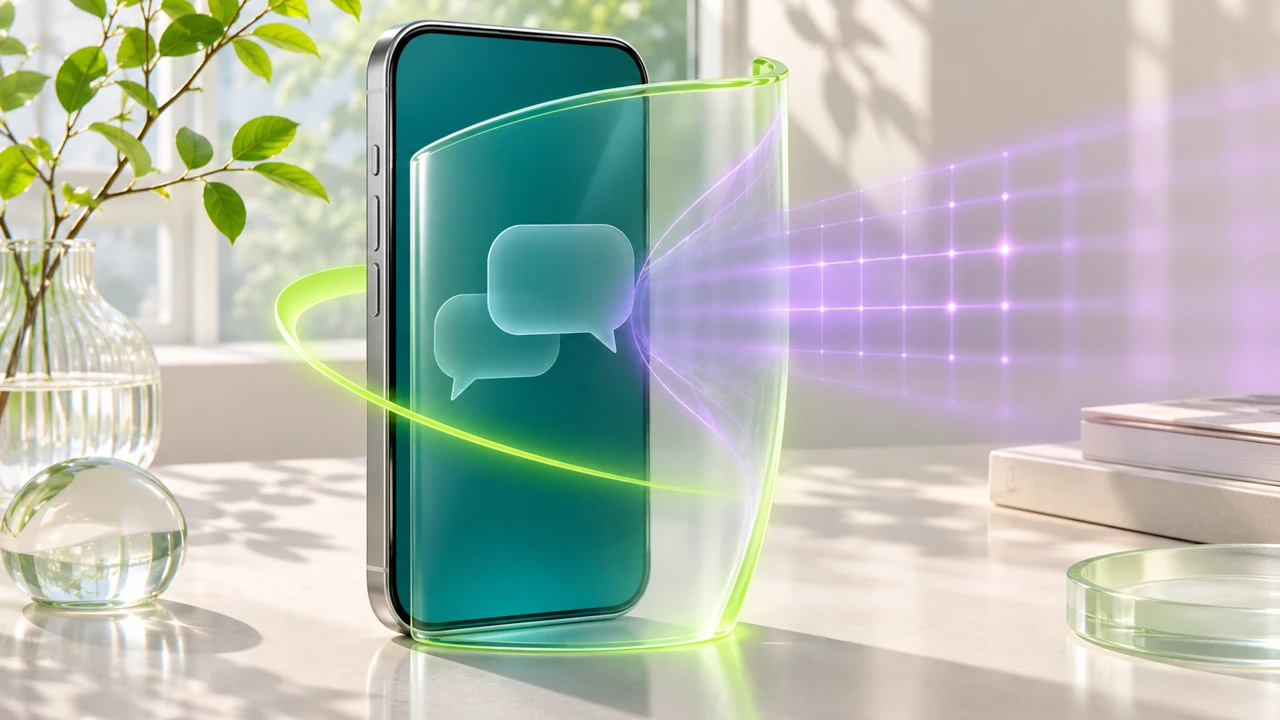
A screen can become another copy of the conversation
Signal links the new measures to its earlier Windows screenshot protection against Recall. The mobile announcement concerns screen capture by agents integrated into the operating system, rather than a new claim that the messenger’s encryption protocol has been broken.
Our interpretation is that this changes the places where users must consider data exposure. A private message displayed correctly can still be copied into another component’s storage or processing workflow. Once that happens, the messenger’s own retention controls cannot be assumed to govern the additional copy.
Android support has a detection boundary
The official post distinguishes iOS 27 screenshot restrictions from Android behaviour that enables Screen security when AI access is detected. It also explains that Android vendor differences prevent Signal from reliably covering every device in the same way.
That qualification matters when comparing phones or support reports. The announcement does not identify one app version that guarantees identical behaviour on all Android distributions. The useful question is what the current device and operating system actually let the application detect and prevent.
Users retain a setting, but the remedy is partial
Signal says users can disable the protection in its settings if they want screenshots. It warns that doing so can expose both their own content and their contacts’ content to the agents. We have not changed any reader’s app or device settings.
The announcement also acknowledges other possible access routes and limitations on macOS. This should not be interpreted as a complete defence against every component with broad system access. Nor does the post establish that every agent sends captured data to a remote server; the destination depends on the system involved.
A request for clearer controls from platform providers
Signal asks operating-system companies for documented ways to exclude sensitive applications from AI access, along with clearer technical specifications. Its concern extends beyond screenshots to the wider interfaces through which agents may obtain application data.
For users and developers, our conclusion is to evaluate display access and agent permissions alongside transport security. The announcement is one privacy-control event across mobile platforms, not a separate launch for each screenshot restriction. We do not infer a new AI model, a security CVE or a guarantee that all data-access paths are closed.
Discussion.
Your perspective matters. Sign in, pick a nickname and choose your cyber identity.
Loading discussion…
Your account name, email and photo stay off your comments.