
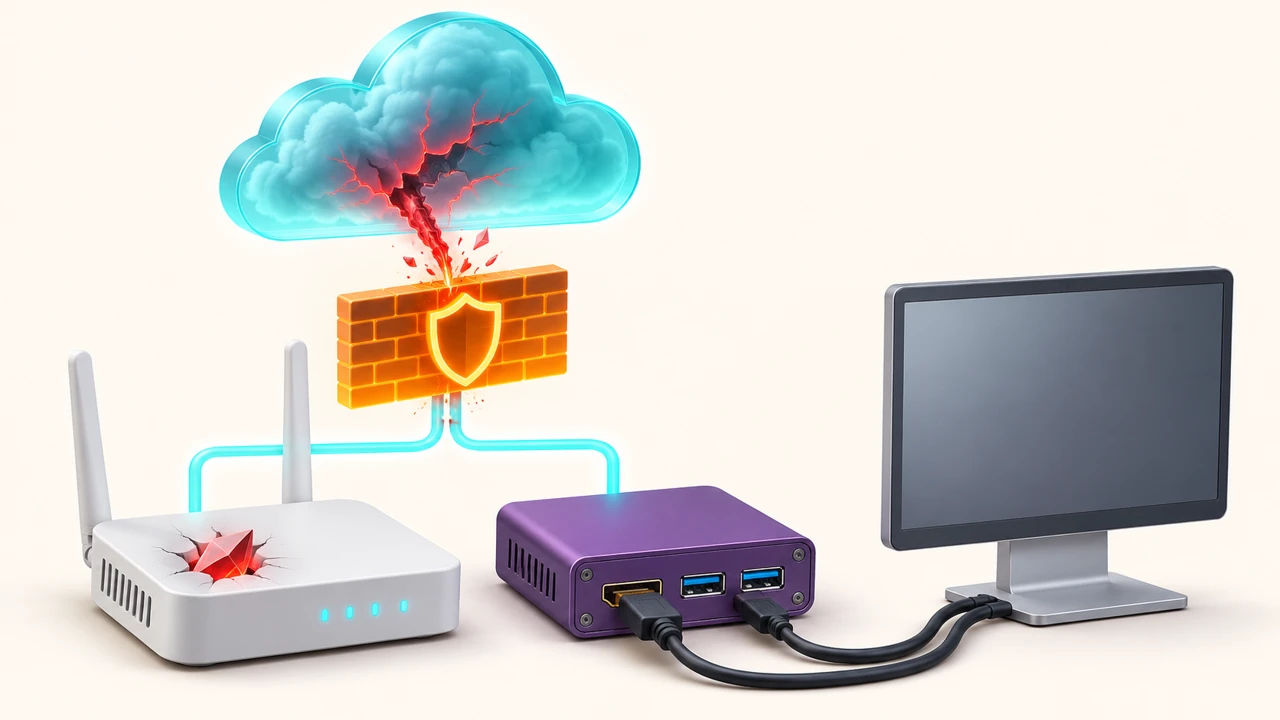
What the manufacturer has confirmed
The official notice covers both networking equipment and devices that provide remote keyboard, video and mouse access to a connected computer. GL.iNet says the blocked path can no longer newly infect devices, while previously installed malware remains a separate problem.
The company is still determining the scope, including whether computers attached to affected KVMs were impacted. It plans device-specific email guidance for identified affected cloud customers. A customer should not read the absence of such an email as proof that a device is unaffected.
Firmware and the initial check have limits
The notice schedules stable security firmware for November 22 and recommends updating the specific model even when its check finds no infection. That schedule is not evidence that every model’s stable download was already available when the notice was written.
Its initial process check looks for crond -i /tmp/.log. A matching entry is an infection indicator. Community researchers describe additional persistence and remote shells, so the absence of that one string cannot rule out every form of compromise. Exact firmware and recovery instructions should come from the manufacturer’s current model-specific guidance.
Community observations are a separate evidence set
RemoteToHome Consulting publishes findings from routers it owns or manages, along with acknowledged uncertainties. Its observations of suspicious cloud commands, reverse shells and an older backdoor are not a representative count of all GL.iNet customers, nor proof that every observed infection belongs to this November incident.
The linked gl-i.net recovery page clearly labels itself an independent community project, rather than a manufacturer-operated or endorsed tool. It warns that checking known traces cannot prove a device clean. We have read these materials without executing their scripts or uploading device data.
Recovery extends beyond the cloud fix
For suspected compromise, the sources distinguish preserving evidence, removing known malware and installing appropriate security firmware. The community guidance also warns against carrying an infected configuration into recovery; evidence archives can contain configuration secrets and should not be published casually.
GL.iNet specifically advises checking computers connected to an infected KVM for unfamiliar programs, accounts, startup changes and unusual activity. Our assessment is that this downstream access makes the KVM case more consequential than a cloud-dashboard outage. Neither confirmed data theft across all customers, a total victim count, an assigned CVE nor attribution to a particular group is established by the reviewed manufacturer notice.

Discussion.
Your perspective matters. Sign in, pick a nickname and choose your cyber identity.
Loading discussion…
Your account name, email and photo stay off your comments.