Early checks gain another resource
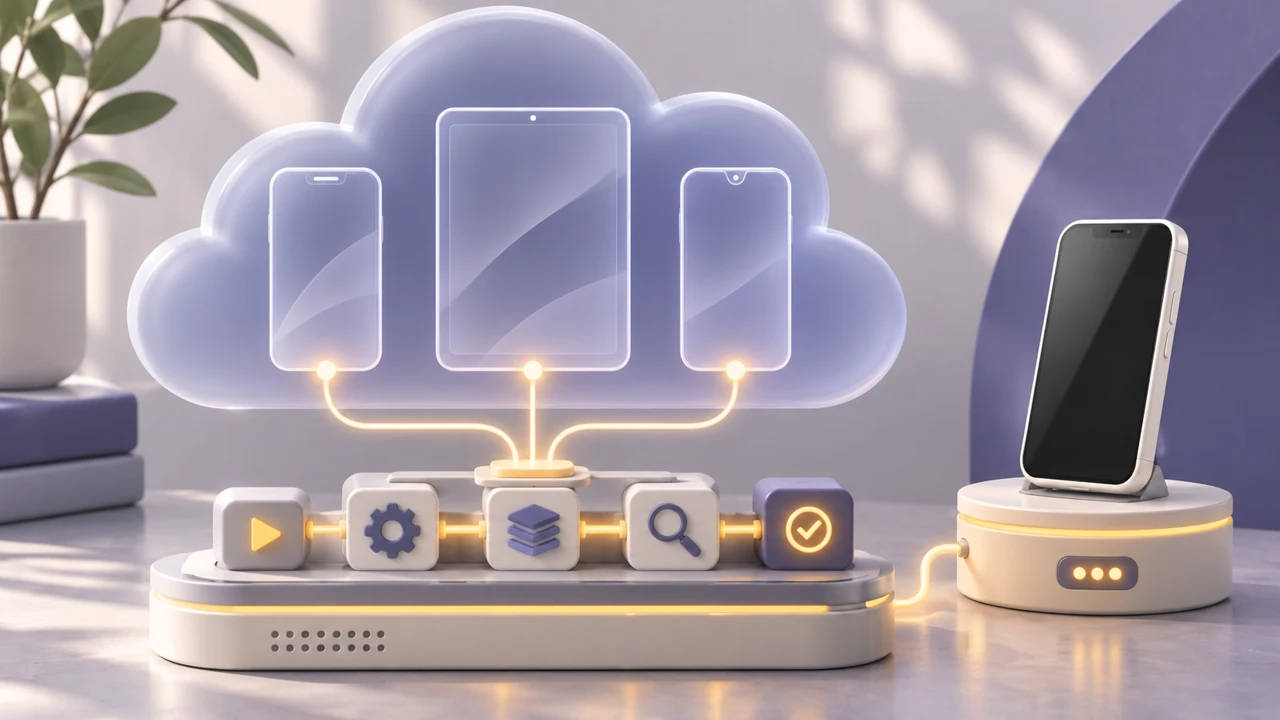
AWS positions virtual environments for pull requests, code merges and smoke tests, where short startup times and a high volume of runs matter. It keeps physical devices as the higher-fidelity choice for regression and release testing. That division describes complementary roles. A successful simulator run does not establish that an application behaves identically on every handset, with its particular sensors, drivers and operating-system details. The new option therefore broadens the test pipeline rather than supplying evidence that hardware validation can be removed.
The device list remains shared
The developer guide places virtual devices in the public device list alongside physical ones. Their names end in Emulator or Simulator and their Device type is Virtual. Several operating-system versions are available. According to the guide, environments using the latest OS version are usually ready in less than 30 seconds, while other versions usually start in about a minute. These are the supplier’s typical startup descriptions, not a guaranteed response time for each request or measurements independently reproduced by this publication.
Automation retains familiar interfaces
The announcement describes shared APIs, test environments and frameworks across real and virtual devices. The guide confirms manual remote-access sessions, standard and custom test environments, and the same test types within each platform. For a custom environment, however, the test specification must set the test host and capabilities. Shared orchestration can reduce the need to maintain a separate emulator fleet, including Mac infrastructure for iOS simulation, but it does not erase platform-specific configuration requirements or establish universal compatibility for an existing test suite.
Networking has a material documentation discrepancy
The launch announcement includes private endpoint access in its description of shared capabilities. The dedicated developer guide instead explicitly states that virtual devices do not support VPC endpoint connectivity, or VPCE. Until AWS clarifies the wording, that specific limitation matters when planning tests against a private backend. This review did not launch a cloud session or test the network path. We are reporting a discrepancy between official documents rather than treating the broader launch wording as verified support.
Billing differs between platforms
AWS says virtual devices use existing metered pricing. For Android, existing unmetered slots can run either a real or a virtual device without an additional charge for that switch. The developer guide separately states that iOS simulators use only metered billing. Consequently, the feature should not be described as free, and Android slot terms should not be transferred to iOS. AWS announces availability in every region where Device Farm is offered, which does not mean the service exists in every AWS region.

Discussion.
Your perspective matters. Sign in, pick a nickname and choose your cyber identity.
Loading discussion…
Your account name, email and photo stay off your comments.