The research question concerns interaction and understanding
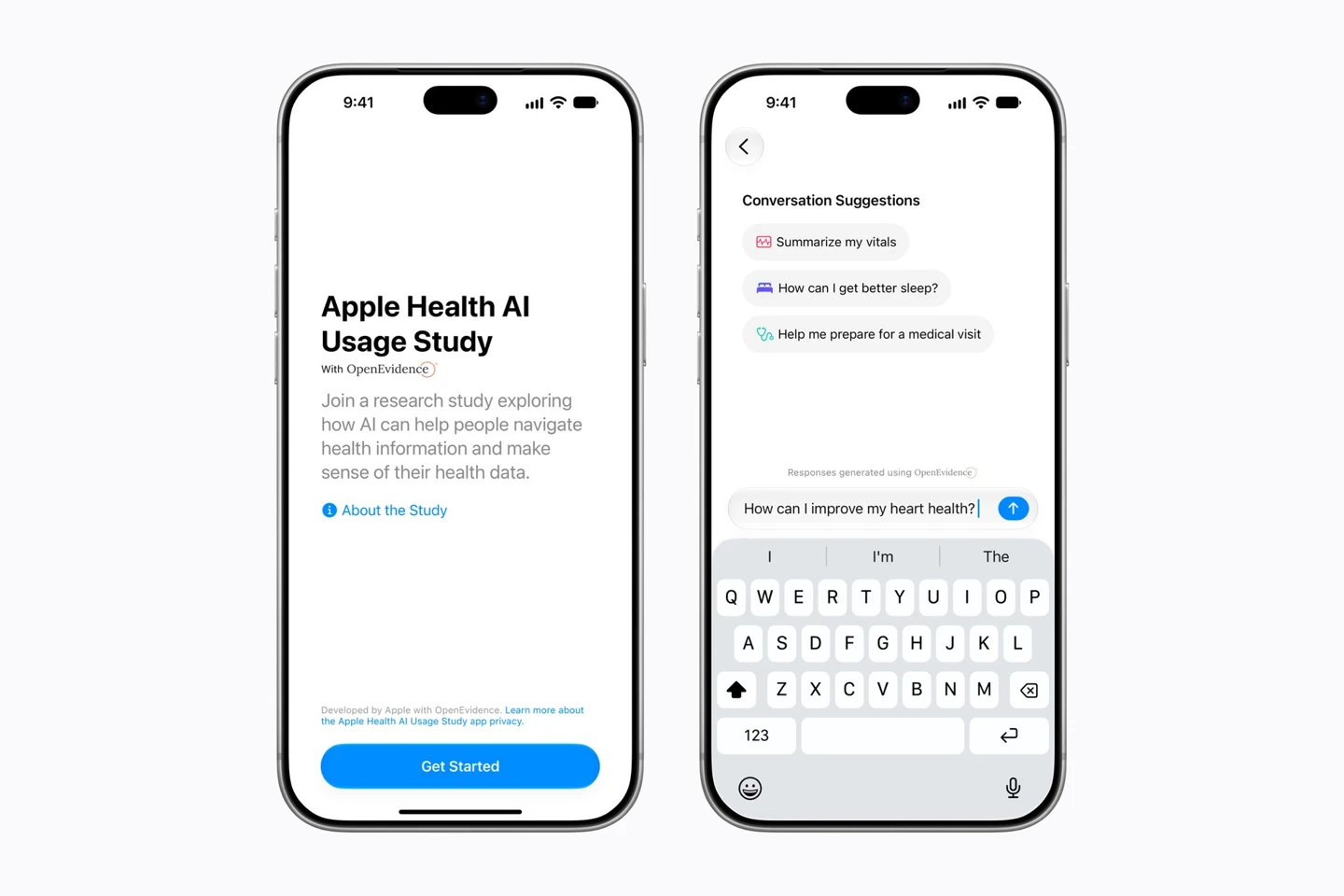
Participants can ask everyday health questions, read explanations of complex information and inspect linked peer-reviewed clinical citations. Apple describes the experience as combining OpenEvidence’s medically grounded technology with an Apple-designed research app. The announcement names sources including NEJM, JAMA and Nature. Citations provide an opportunity to inspect supporting material, but their presence alone does not establish that every generated claim is correct or faithfully represents the research. The quality of answers and how people understand them are themselves subjects of the study.
HealthKit context is an optional part of participation
Participants may choose to share selected HealthKit data types, such as resting heart rate, activity, sleep or laboratory results. The goal is to investigate how personal context affects relevance and understanding. Apple says study data will not be used to train AI models and that participants control whether to share metrics or survey responses. Those are organizer statements about the research arrangement, not a claim that the app processes no personal information. The distinction matters when describing the study’s privacy design without replacing its actual enrollment information.
Eligibility limits the scope of availability
The study is open to up to 200,000 eligible US participants aged 21 or older. Apple specifies an Apple Intelligence-enabled iPhone, described as iPhone 15 Pro or later, running iOS 26 or later. This is therefore a defined research enrollment rather than an international release for every iPhone owner. A dedicated study app provides further information and an enrollment choice. The announcement does not provide completed findings on participant behavior or establish when a representative set of results will become available.
The announcement states important limits
Apple acknowledges that consumer LLM tools can produce incomplete or unclear answers. It describes guardrails intended to detect certain concerning questions and suggest follow-up with a provider or other resources. The app is explicitly not intended to diagnose or treat conditions or replace professional medical advice. Another research question is whether it can help people prepare for appointments with their own clinicians. Published methods and outcomes will be the next evidence-bearing milestones; the study’s opening should remain separate from claims of demonstrated medical effectiveness.


Discussion.
Your perspective matters. Sign in, pick a nickname and choose your cyber identity.
Loading discussion…
Your account name, email and photo stay off your comments.