
What changed on November 16
AMD says Fei-Fei Li joins as executive vice president and chief scientist, reporting to Lisa Su. World Labs researchers will continue foundational model work while collaborating with AMD engineering teams. The completion notice does not announce a customer product or a public model release.
That distinction matters when reading acquisition coverage. An agreement, a closing and a subsequent technology launch are different milestones. The event reported here is the closing; anticipated benefits should be evaluated as a research and engineering direction rather than an immediately usable feature.
The earlier agreement provides context
In its September 28 announcement, AMD described an approximately $8.2 billion all-stock transaction. The November completion notice does not publish a revised valuation or a separate cash purchase price. Repeating the earlier amount without its date could give readers a misleading picture of what was newly disclosed.
For readers following technology rather than deal mechanics, the important question is what collaboration eventually produces. Corporate integration alone provides no measurement of model quality, application performance or developer adoption. Those outcomes require later evidence.
Why spatial AI interests a chip company
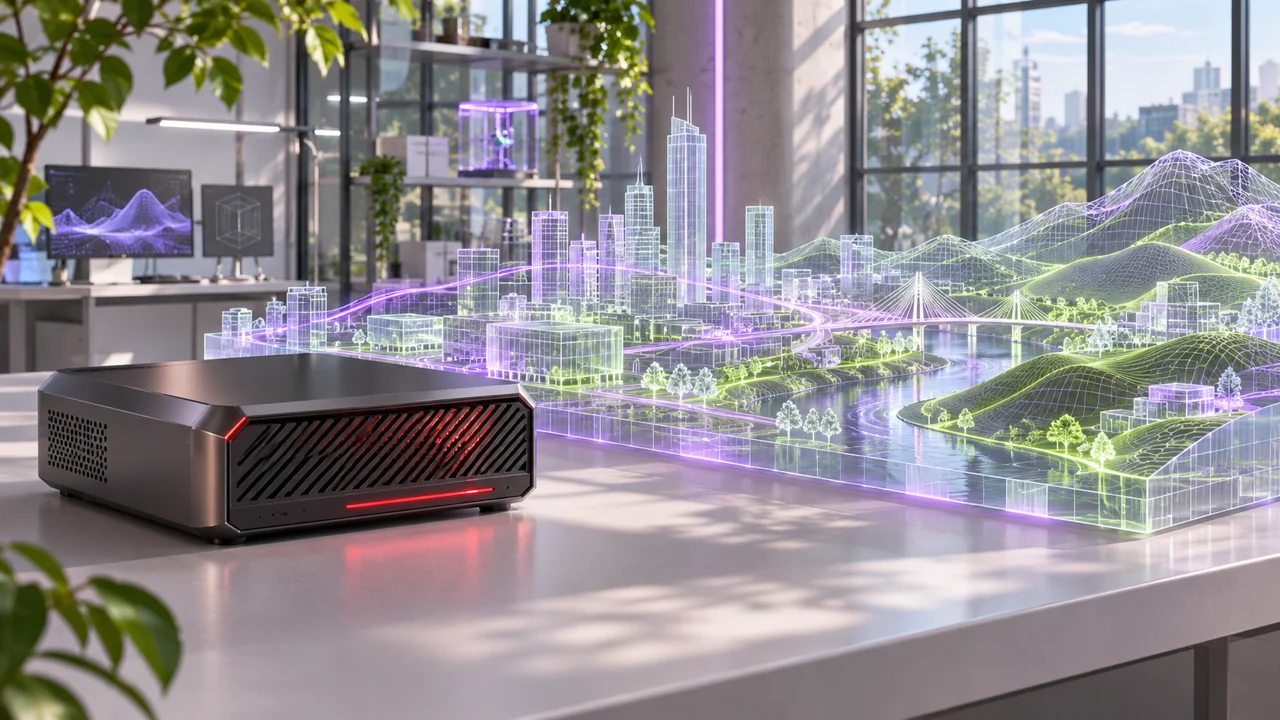
World Labs works on models for interactive three-dimensional environments and on robotic learning and simulation. AMD presents the combination as a way to inform future hardware, software and systems through closer contact with model research.
Our analysis: spatial workloads can make data movement, memory use and the coordination of several processing stages important design questions. A research team inside an infrastructure supplier may help expose those requirements earlier. This is a plausible engineering motivation, not proof that a particular future processor will outperform competitors.
What developers can actually act on
The announcement supplies no new installation instructions, model weights, compatibility matrix or benchmark for an application team to adopt. Existing development decisions should therefore continue to rely on shipping tools and tests against real workloads.
Useful follow-up signals would include a documented release, reproducible evaluation, supported hardware and explicit licensing terms. Until such material appears, the acquisition is significant organizational news. It should not be presented as a promise of free models, guaranteed open weights or immediate improvements to existing AMD deployments.


Discussion.
Your perspective matters. Sign in, pick a nickname and choose your cyber identity.
Loading discussion…
Your account name, email and photo stay off your comments.